Updates from Our 2025 Scholarship Winners

[Image Description: Graphic has a black background with aqua lettering and states, “DR. PAUL ERNSBERGER RESEARCH SCHOLARSHIP”. Above the text is a drawing of a lab beaker.]
Dr. Paul Ernsberger dedicated decades of his professional life to research on metabolic syndrome, diabetes, weight cycling, and the medical harm caused by diet obsession and weight bias. His work continues to have an immeasurable impact on debunking myths and misunderstandings about fat and health. The Paul Ernsberger Research Scholarship (PERS) is granted to graduate students whose research contributes to the continuation of Dr. Ernsberger’s legacy. Below are updates from four of our 2025 awardees and learn how the scholarship is aiding them in their pursuits. (Stay tuned to meet our 2026 scholarship winners later this summer!)
This scholarship is offered through the generous donations of NAAFA supporters who opt to give specifically to this fund. To make a PERS contribution, visit NAAFA.org/give.
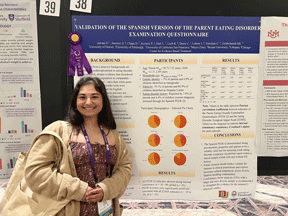
[Image description (provided by the person pictured): A young brown woman stands smiling in front of a research poster presentation at a conference. She has long, dark hair and is wearing a floral dress, a beige cardigan, and a conference lanyard with badges. She is holding a canvas tote bag. Behind her, the main poster is titled "Validation of the Spanish Version of the Parent Eating Disorder Examination Questionnaire." The poster displays sections labeled Background, Participants, Results, and Conclusions, and includes multiple charts and statistical tables. A purple ribbon labeled "Best of Show" is pinned to the top of the poster. The University of Denver and other academic institutions are listed as affiliations. Two additional posters are partially visible on either side, labeled #38 and #39.]
Shikha Advani (she/her)
Research Focus:
Weight Stigma Intervention (We Deserve Space)
How did the Dr. Paul Ernsberger Research Scholarship support your research:
The scholarship funded me as a researcher. I took on the lead RA role (unpaid) and this scholarship funded my time and efforts - especially as I was also a group facilitator for the intervention.
How is your research carrying on Dr. Ernsberger's legacy and furthering fat liberation?
This intervention research is incredibly important to push forward fat liberation in the eating disorder space and creating more room for larger bodied folks to talk about their experiences in order to lessen weight stigma (internalized and externalized). The intervention specifically used fat liberation tenets to create the intervention.
An outline of the research work the scholarship funded:
A group-based intervention focused on decreasing internalized weight stigma and eating disorder symptoms for folks in larger bodies. Data from the intervention is currently being analyzed.
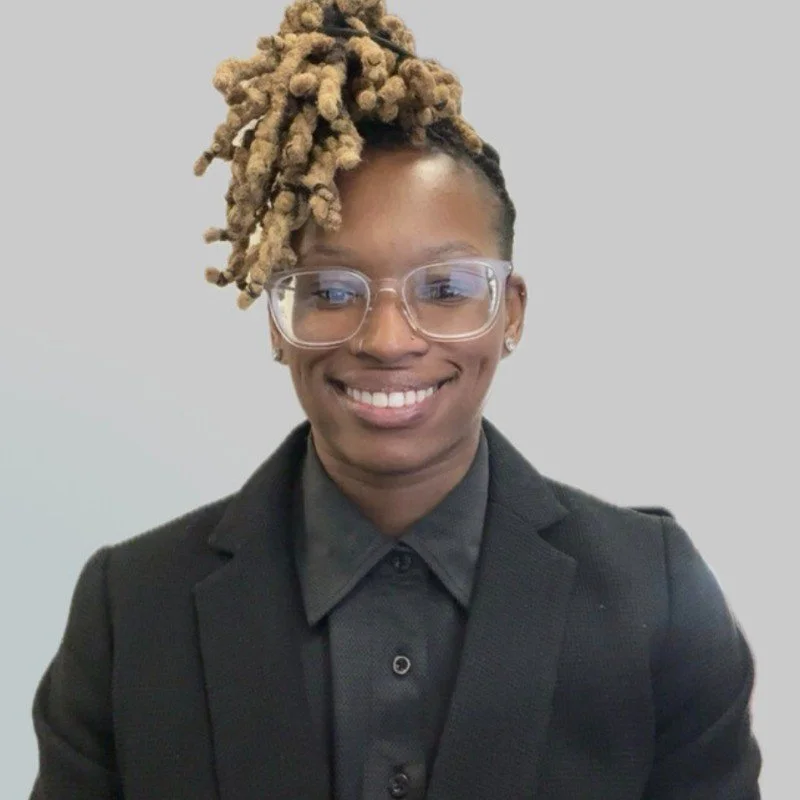
[Image description: Headshot of Maria Matory.]
Maria Matory (she/her)
Research Focus:
Metabolic syndrome
Weight cycling
How did the Dr. Paul Ernsberger Research Scholarship support your research?
The Dr. Paul Ernsberger Research Scholarship provided critical support that allowed me to devote more time and energy to conducting meaningful obesity related research. As a graduate student balancing coursework, employment, and research responsibilities, financial support helped reduce barriers that often limit students' ability to engage deeply in scholarly work.
This scholarship enabled me to focus on data analysis, scientific writing, and professional development opportunities that strengthened both the quality of my research and my growth as an emerging public health researcher. It also allowed me to further explore questions related to obesity, genetics, health disparities, and chronic disease prevention among African American populations.
Beyond the financial assistance, receiving a scholarship named in honor of Dr. Paul Ernsberger carried special meaning because of his commitment to advancing obesity research and challenging simplistic narratives surrounding weight and health. His work emphasized the importance of understanding obesity through a scientific and compassionate lens rather than through stigma and blame. That perspective aligns closely with my own research interests and values.
The scholarship reinforced my commitment to pursuing research that examines the complex biological, environmental, and social factors that contribute to obesity and related health outcomes. It provided encouragement during an important stage of my academic and professional development and strengthened my ability to contribute to research that has the potential to improve health equity and inform public health practice.
How is your research carrying on Dr. Ernsberger's legacy and furthering fat liberation?
Dr. Paul Ernsberger's work challenged reductionist views of body weight by emphasizing the complex biological, environmental, and societal factors that influence health. My research continues that legacy by moving beyond the assumption that body size is solely the result of individual choice and instead examining the interaction of genetics, behavior, stress, and social determinants of health.
Using data from the Jackson Heart Study, my research focuses on African American adults, a population that has historically been underrepresented in genetic and obesity research. By studying how genetic predisposition interacts with environmental and psychosocial factors, this work highlights that weight related outcomes are influenced by a broad network of factors rather than personal responsibility alone.
This perspective aligns with principles of fat liberation by encouraging a more nuanced and evidence based understanding of body size and health. Rather than reinforcing stigma, the research seeks to identify structural and biological influences that shape health outcomes and contribute to disparities. It recognizes that health cannot be fully understood through weight alone and that social context matters.
Additionally, the project contributes to greater representation in obesity research by centering a population that has often been excluded from studies informing clinical and public health recommendations. Producing more inclusive evidence helps ensure that future interventions, policies, and health messages are grounded in equity and scientific rigor.
In this way, the research reflects Dr. Ernsberger's commitment to challenging stigma, advancing scientific understanding, and promoting a more compassionate and inclusive approach to health.
An outline of the research work the scholarship funded:
The Dr. Paul Ernsberger Research Scholarship supported my research examining the relationship between genetic predisposition to obesity and body mass index among African American adults participating in the Jackson Heart Study. Specifically, my work investigated how a BMI polygenic risk score interacts with factors such as age, sex, physical activity, and perceived stress to influence BMI outcomes.
The project involved data management, statistical analysis, literature review, interpretation of findings, and scientific writing. Using multivariable regression models, I evaluated both the independent effects of genetic risk and the extent to which behavioral and psychosocial factors may modify those associations.
The research is currently in the manuscript development stage. Preliminary findings suggest that higher genetic risk is associated with increased BMI, while lifestyle and environmental factors may influence the strength of that relationship. These findings contribute to a growing understanding of how biological and social determinants interact to affect obesity risk in historically underrepresented populations.

[Image description (provided by Hillary Hecht): a smiling, young, white femme appearing person with short, dark hair and wearing eyeglasses. They are wearing a blue button-down shirt with white buttons and have long, dangly earrings.]
Hillary Hecht (they/them)
Research Focuses:
Medical harm caused by weight loss obsession
Medical harm caused by physician/practitioner bias
How did the Dr. Paul Ernsberger Research Scholarship support your research?
The Dr. Paul Ernsberger Research Scholarship has conferred trust and prestige to my research, supporting the recruitment of expert participants who recognize and respect the value of NAAFA’s advocacy and of vetting the validity and values underlying these research studies. Further, NAAFA’s support provides legitimacy to this work when disseminating findings to informed research and clinical audiences.
Previously, the 2024 and 2025 Dr. Paul Ernsberger Research Scholarships have paid for participant compensation ($525 total spent), online conference registration to present study methods at the 2025 IWSC ($125), and two graduate research assistants each with lived experience to support data cleaning ($4,350). Having hired and managed these two part-time, fixed term students, I extended beyond my available PERS budget to pay them out-of-pocket to complete their scopes-of-work. Their collaborations have made each project more robust and joyful to complete.
How is your research carrying on Dr. Ernsberger's legacy and furthering fat liberation?
This work aims to make practical strengths-based fat-inclusive and liberatory efforts in healthcare. Dismantling anti-fatness and replacing it with affirmative liberatory efforts are essential to intersectional inclusion and health equity goals. Dr. Ernsberger’s research approach to fat liberation aimed to dispel myths and misunderstandings about the relationship between fatness and health. My approach intends to change structural contexts towards liberated and affirming healthcare spaces for fat patients and potential patients to seek care, changing institutional and provider behavior.
There is currently a dearth of implementation science and public health research broadly interested in organizational-level interventions to address anti-fatness in healthcare. My goal is for this doctoral dissertation to begin to fill that gap, and my postdoctoral research agenda to continue to broaden our shared knowledge and skillset to implement Size-Inclusive Care broadly across healthcare contexts. My role in academic scholarship is to bring together this topic with these approaches and methods to contribute to the legacy fat liberation research. As researchers collaborate to disrupt the medical harms caused by physician/practitioner biases, I hold deep esteem for my colleagues who approach changing clinicians’ attitudes and beliefs towards their fat patients; my work aims to change behavior and settings as cultural and interpersonal sentiments evolve.
Dr. Ernsberger’s renowned career as a scholar and an educator invigorates me to balance my own contributions to academic research and to classroom expansion of fat liberatory topics. In addition to sharing introductory knowledge about the role of anti-fatness in public health with undergraduate students, and broadly via guest lectures with students across disciplines, I was recently invited to share with a clinician and administrative audience. I presented an interactive session at the Trauma-Informed Care Healthcare Provider Conference by the Wake Area Health Education Center and Durham County Department of Public Health in April 2026, at which I shared both an introduction to anti-fatness in healthcare along with nascent dissertation findings about interventions to provide Size-Inclusive Care. Aspiring towards an academic faculty career in both teaching and research, I am honored to follow in Dr. Ernsberger’s footsteps by folding in liberatory actions to all of my scholarly activities. I am incredibly appreciative to have received the Dr. Paul Ernsberger Research Scholarship in 2024 and 2025, which has made my doctoral dissertation possible and deepened the robustness of my findings.
An outline of the research work the scholarship funded:
My doctoral dissertation lays foundational evidence for the implementation of Size-Inclusive Care as a clinic-wide policy in healthcare settings. Findings described what primary care clinics do to enact size-inclusive policies and practices. Grounded in the Health Equity Implementation Framework (HEIF), I analyzed clinician interview transcripts using qualitative content analysis (QCA; manuscript in preparation), analyzed clinics’ artifacts using critical discourse analysis (CDA; data analysis underway) and used latent class analysis (LCA; manuscript in revisions) to describe who experienced size-based discrimination. Together, these studies generate a resource list for patients and providers listing primary care organizations that articulate their mission to provide Size-Inclusive Care. I have communicated with NAAFA about publishing this list on NAAFA’s site. In addition to at least three peer-reviewed manuscripts currently in progress, I have also generated a provider toolkit for starting to do Size-Inclusive Care. This current one-page toolkit is also available for dissemination and publishing, either by NAAFA or organizations like AWSIM. I propose to continue this research agenda in my postdoctoral scholarly career, prioritizing Size-Inclusive Care implementation outcomes for primary and specialty clinics across the United States.
Results from this work include the findings from interviews, i.e., four phases to enacting Size-Inclusive Care in primary settings: (1) Prepare: choose, label, and define the approach; (2) De-Implement: stop weight-centric practices, focus on non-size measures; (3) Practice: a) write policies, b) spend on supplies, equipment, and accessible facilities, c) educate patients and providers, d) advocate for patients, e) refer intentionally, f) measure weight only when needed, and g) evaluate efforts; and (4) Communicate: market and advertise practices and philosophy. From the single-level latent class analysis (LCA), I described groups of older adults across the United States by discrimination they reported experiencing. LCA revealed that body size-based discrimination co-occurred in the group that primarily experienced race-based discrimination. Among only people who reported size-based discrimination, one group all reported race- discrimination, and another all reported age- discrimination.
The Latent Class Analysis manuscript went through the revision process for the special issue of Frontiers in Psychiatry: From weight stigma to size and weight inclusiveness and liberation, before ultimately being rejected. I am incorporating their reviewers’ feedback, have added additional analyses, and am prepared to re-submit this manuscript in Summer 2026. One target journal for this study is Social Science & Medicine (SSM). Findings from this study were presented at the June 2025 Weight Inclusive Research Education (WIRED) Annual Meeting. For the interview manuscript, I am currently preparing this manuscript for submission in Fall 2026, targeting journals: JAMA, Journal of General Internal Medicine, or BMC Primary Care. I have presented findings from this work at the July 2026 Annual International Weight Stigma Conference (IWSC), the May 2026 Association for Weight and Size Inclusive Medicine (AWSIM), First Annual Scientific & Member Assembly, and my local Area Health Education Center (AHEC) Trauma-Informed Care Healthcare Provider Conference. For the Critical Discourse Analysis manuscript, analysis is currently underway, and the manuscript is being prepared for submission in late Fall 2026 to target journals Health Communication, or Journal of Family Practice. This work is in preparation to be presented at the July 2026 Weight Inclusive Research Education (WIRED) Annual Meeting.
![[Image description (provided by the person pictured): Photo of Kari Slater, a smiling young fat white female with shoulder-length light brown hair, wearing a black sweater over a patterned dress.]](https://images.squarespace-cdn.com/content/v1/5e7be2c55ceb261b71eadde2/0cd0f791-8293-4328-bdc4-7b74682af865/Kari+Slater+-+PERS+winner.png)
[Image description (provided by the person pictured): Photo of Kari Slater, a smiling young fat white female with shoulder-length light brown hair, wearing a black sweater over a patterned dress.]
Kari Slater (she/her)
Research Focuses:
Size-inclusive counseling competencies
How did the Dr. Paul Ernsberger Research Scholarship support your research?
Prior to receiving the scholarship, I was feeling discouraged. I had completed my dissertation proposal and received feedback from a committee member that aligned with weight normative views. I was questioning whether my research would be taken seriously in the field or have an impact. Receiving the scholarship provided encouragement and validation. It also allowed me to pay my expert participants, all of whom completed all three rounds of data collection. Additionally, I have presented phases of my dissertation at national counseling conferences, which has provided encouragement to others in the field who share my passion for size inclusion. The scholarship has provided financial support, accountability, and inspiration to continue doing this important work in the counseling field in alignment with my commitment to social justice, accessibility, equality, and inclusion.
How is your research carrying on Dr. Ernsberger's legacy and furthering fat liberation?
The counseling field is heavily influenced by the medical model in spite of valuing wellness as a holistic concept. My research challenges narrow definitions of wellness by highlighting expert perspectives on size-inclusion. In response to challenges from my committee, I integrated Dr. Ernsberger’s research into my literature review to further substantiate a size-inclusive approach. The results of the study emphasize the importance of supporting client autonomy, preventing harm inflicted by diet culture and weight bias, and supporting client advocacy. Additionally, the results are housed within a social justice framework that acknowledges weight bias as a matter of social justice which aligns with the fat liberation movement.
An outline of the research work the scholarship funded:
In May, I defended my dissertation, "Establishing Consensus on Size-Inclusive Counseling Practices: A Delphi Study." I worked with 17 counselors with expertise in size-inclusion and body diversity to reach consensus on potential counseling competencies. 132 competencies reached consensus and were organized under the developmental domains of the Multicultural and Social Justice Counseling Competencies (MJSCC). It was published in ProQuest. I used some of the funds so that it is an open source document with free access.