Why Fat Liberation Matters to Me as a Physician
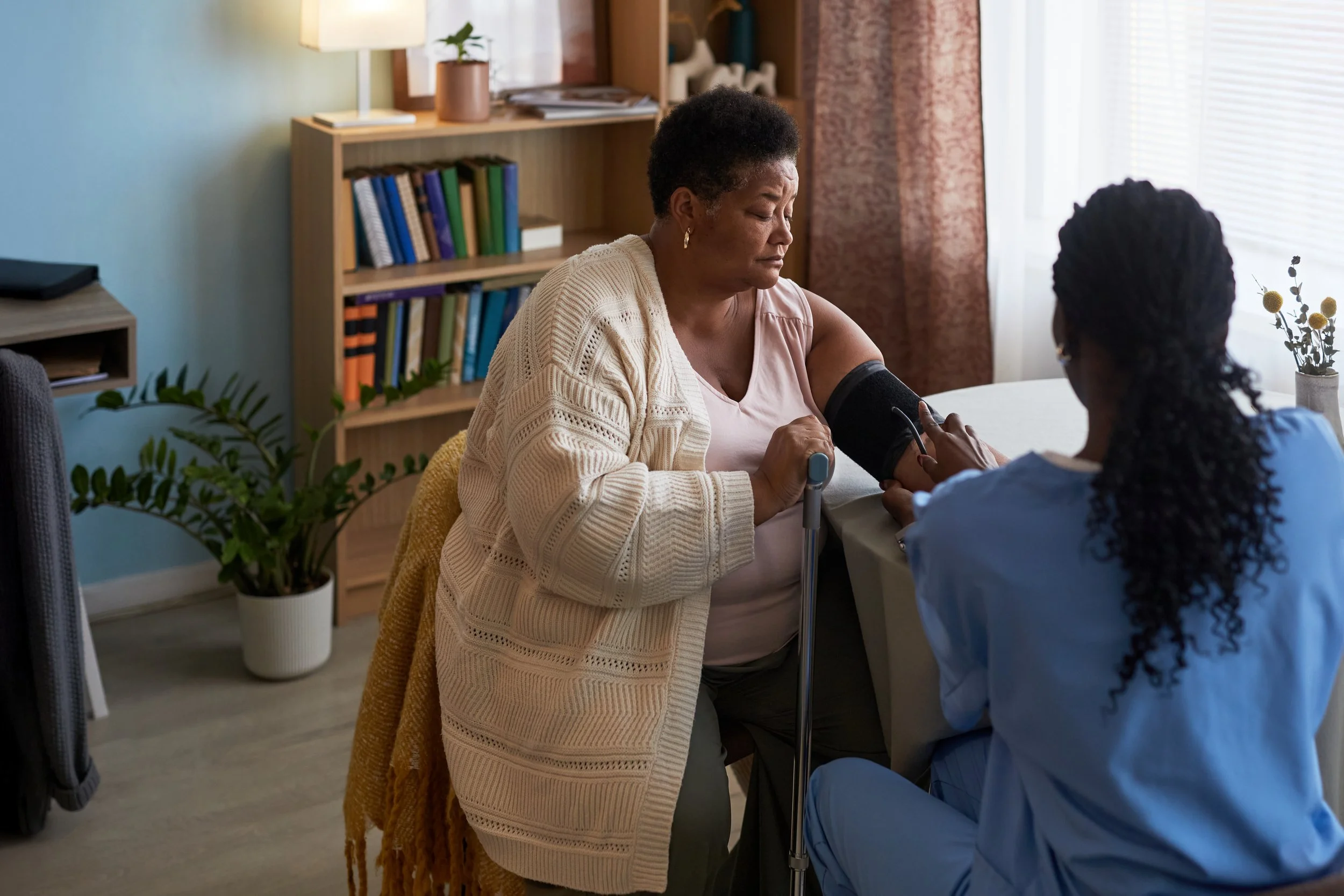
Image Description: A photo of a fat Black patient who is holding a cane having their blood pressure taken by a Black healthcare provider wearing blue scrubs. They are sitting at a table with a bookshelf, desk, and curtains in the background. Photo Credit: DragonImages via iStock.
Content Warnings: Discussion of medical anti-fatness
I did not come to fat liberation because it was comfortable.
I came to it because I could no longer ignore the harm I was witnessing—and participating in.
I am a physician. I was trained to see fat bodies as problems to solve. I learned how easily concern becomes control, how quickly “health” is used to justify erasure. Fat liberation forced me to reckon with the cost of that training—not in theory, but in people’s lives.
For years, I watched patients arrive already braced for dismissal. They apologized before speaking. They minimized pain. They learned which symptoms were safe to name and which would be blamed on their bodies. I saw how often fatness became the explanation that ended the conversation. I also learned how silence, in medicine, is rarely neutral. It protects the system more than the person in front of you.

Dra. Mónica Peralta. Image Description: A Latine woman with shoulder-length, dark, curly hair wearing a white medical coat and pink scrubs smiles for the camera. Her hands are in the pockets of her coat, which is open in the front.
I told myself I was helping. That my intentions mattered. That I could soften the edges of a harmful system simply by being kind. But fat liberation made something painfully clear: kindness does not undo structural violence. When a system is built on distrust of fat bodies, harm does not require cruelty. It only requires compliance.
What fat liberation offered me was not a new set of techniques, but a different way of seeing. It asked me to stop locating the problem in individual bodies and start paying attention to power. To ask who benefits when shame is framed as motivation, when weight loss is treated as moral success, when fat people are asked to earn care by changing themselves.
Fat liberation matters to me because it is not abstract. It lives in exam rooms, waiting rooms, and diagnostic delays. It lives in fear—fear of being blamed, ignored, or humiliated in spaces meant for care. It also lives in resistance. In fat people who insist on dignity, autonomy, and joy in a world that treats those things as conditional.
I now work with the Association for Weight and Size Inclusive Medicine, not because institutions can deliver liberation, but because they must be challenged from within. AWSIM exists because medicine routinely fails fat people—and often punishes clinicians who refuse to participate in that harm. Fat liberation did not lead me to this work; it is what holds it accountable. Without that grounding, weight-inclusive care risks becoming just another rebrand that leaves power untouched.
Fat liberation does not belong to medicine. It does not need professional validation. If institutions like AWSIM matter at all, it is only insofar as they listen to fat communities, confront medical authority, and remain uncomfortable. Liberation is not polite. It is disruptive by necessity.
This work is unfinished. I am still unlearning. Still being corrected. Still practicing. Fat liberation matters to me because it refuses to let me hide behind credentials or intentions. It demands humility. It demands accountability. And it reminds me that justice is not a destination, but a daily practice—one that begins by believing fat people when they tell us what harm feels like.